Royal Garden Collection: A Painterly Toolkit for Timeless Design
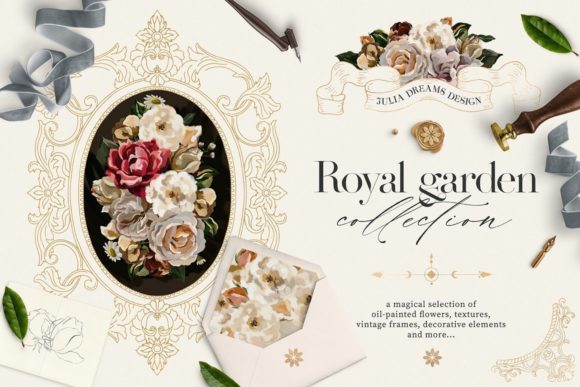
There's a particular kind of beauty that emerges when an artist's hand meets a canvas—those imperfect, textured brushstrokes that digital design often struggles to replicate. The Royal Garden Collection bridges that gap, offering a curated suite of oil-painted flowers, vintage frames, seamless patterns, and decorative elements that feel genuinely handcrafted. Inspired by classical painting masters, this collection brings an organic warmth to projects that might otherwise feel sterile or overly polished.
What Makes This Collection Different from Standard Design Assets
Most digital asset packs lean heavily on vector precision and geometric perfection. The Royal Garden Collection takes the opposite approach. Every oil flower carries the subtle imperfections of real pigment on canvas—slight color variations, visible texture, and a richness that flat digital illustrations simply cannot achieve. The 27 oil-painted botanicals come with transparent backgrounds, making them easy to layer into any composition without awkward edges or masking headaches.
Beyond the flowers themselves, the collection includes pencil-drawn botanicals in both black and white versions, offering a more delicate alternative for projects that need visual interest without heavy color saturation. Six seamless patterns and six oil textures provide backdrops that add depth without competing with your primary design elements. The frames—available in black, white, and gold line variations—give layouts a finished, gallery-worthy quality that works beautifully for both print and digital applications.
Practical Applications for Real Projects
If you design wedding invitations, you already know how challenging it can be to find floral elements that look sophisticated rather than clip-art-ish. The pre-built compositions in this pack—18 of them, ready to drop into your layout—solve that problem immediately. Arrange them around text blocks, use them as corner accents, or build entire invitation suites around a single hero arrangement.
For small business owners developing brand identity materials, the collection offers surprising versatility. A boutique bakery might use the oil-painted peonies across packaging labels, social media posts, and in-store signage. A wellness brand could lean on the pencil flowers for a more restrained, editorial look on website headers and email templates. The key is that these elements carry a cohesive visual language—once you establish which pieces define your brand's aesthetic, everything you create afterward feels intentionally connected.
Social media managers and content creators will find the textures and patterns particularly useful for creating consistent Instagram grids, Pinterest pins, and blog graphics. Rather than starting from a blank canvas each time, you can build a library of templates using these elements and rotate through them, maintaining visual consistency while keeping content fresh.
Compatibility and Workflow Considerations
One of the more practical strengths of the Royal Garden Collection is its broad software compatibility. Whether you work primarily in Photoshop, Illustrator, Procreate, Affinity Designer, or even Canva, the PNG files with transparent backgrounds integrate seamlessly. This matters for teams where different members might use different tools, or for freelancers who switch between platforms depending on the project.
The inclusion of both JPG and PNG versions for textures and patterns is a thoughtful touch. JPGs work well for quick background fills where file size matters, while PNGs with transparency give you more control over layering and blending modes. For print projects—think posters, wall art prints, or editorial layouts—the high-resolution files hold up well at larger scales, which is not always the case with decorative asset packs.
Building Visual Consistency Across Touchpoints
Strong brands repeat visual motifs intentionally. When a customer sees your Instagram post, then visits your website, then receives a product package in the mail, those experiences should feel connected. The Royal Garden Collection supports this kind of visual storytelling because its elements share a unified aesthetic—oil painting textures, classical floral arrangements, and vintage-inspired frames that complement each other naturally.
Consider creating a simple brand board using three to five elements from the collection. Choose a primary flower arrangement for hero images, a secondary botanical for smaller applications, a texture for backgrounds, and a frame style for featured content. Once established, this palette becomes a visual shorthand for your brand. Marketing materials, digital products, and even internal documents take on a polished, intentional quality without requiring a designer's intervention for every piece.
Choosing the Right Elements for Your Project Goals
Not every project needs every piece in the collection. Wedding invitations and luxury product packaging benefit from the full, rich oil flowers and gold frames. Editorial layouts and blog designs often work better with the pencil illustrations and simpler line frames, which add personality without overwhelming body text. Social media graphics might call for a single bold flower against a texture background rather than a complex composition.
Think about your audience's expectations as well. A high-end skincare brand targeting women aged 30–50 might gravitate toward the gold frames and lush floral arrangements. A modern stationery company appealing to a younger demographic could pair the black line frames with the pencil flowers for something that feels contemporary yet still handcrafted. The versatility within the collection means you are not locked into a single aesthetic direction.
Commercial Use and Licensing
For designers and business owners who plan to use these assets in client work or products for sale, reviewing the licensing terms before purchasing is essential. Most premium design asset collections allow commercial use, but specifics vary—some limit the number of end products, others require attribution, and some restrict use in print-on-demand marketplaces. Understanding these details upfront prevents complications later, especially if you plan to incorporate the elements into merchandise, digital products, or marketing assets distributed at scale.
The Royal Garden Collection positions itself as a comprehensive creative toolkit rather than a single-purpose resource. Its real value lies in the relationships between its components—the way the textures complement the flowers, the way the frames enhance the compositions, the way everything shares a painterly, classical sensibility. For anyone building a visual brand, creating editorial content, or designing print materials that need to feel elevated and artisanal, it offers a cohesive starting point that saves hours of sourcing and matching individual assets.