Capturing Coastal Charm: Italian Seaside Mediterranean Clipart
There’s a specific quality to the light along the Italian coastline—the way the sun hits the terracotta roofs, the azure blue of the Tyrrhenian Sea, and the lush greenery of lemon groves. Translating that specific "dolce vita" aesthetic into a digital or physical product requires more than just a stock photo; it requires a cohesive design language. If you have ever struggled to find a visual asset that perfectly captures that breezy, sophisticated, and slightly rustic Mediterranean vibe, you know how difficult the search can be. Generic clipart often feels sterile, lacking the warmth and texture needed to evoke the feeling of a coastal getaway. This is where high-quality thematic design assets become invaluable for creators and business owners alike.
The Visual Language of the Coast
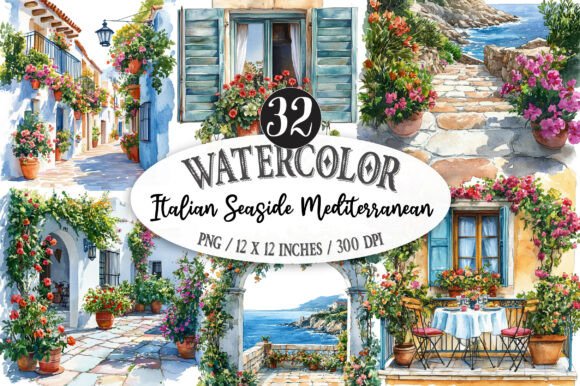
Italian Seaside Mediterranean Clipart is not just a collection of random images; it is a curated toolkit designed to evoke a specific emotional response. The visual appeal of this style lies in its balance of organic textures and vibrant colors. You are looking at a palette that typically features deep indigos, terracotta oranges, olive greens, and crisp whites—colors that naturally draw the eye and suggest leisure and luxury.
For designers, this type of asset offers a distinct advantage: immediate context. When you use these elements, you aren't just decorating a page; you are transporting the viewer. Whether it’s a stylized Vespa, a detailed architectural archway, or a simple lemon branch, these images carry cultural weight. They suggest quality, tradition, and a relaxed lifestyle. This is particularly useful if your project requires a "premium font" or artistic style that feels hand-crafted rather than mass-produced. The organic nature of these illustrations pairs beautifully with "handwritten font" styles or elegant "serif font" typography, creating a bridge between the visual and the textual elements of your design.
Practical Applications for Modern Creators
You might be wondering how a thematic set of illustrations fits into a modern workflow. The versatility of a high-resolution collection—specifically one provided at 12 inches by 12 inches and 300 DPI—is surprisingly broad. Because these files are print-ready, they eliminate the headache of pixelation or resizing issues that plague lower-quality assets.
Here is how different professionals can leverage these assets:
- Small Business Owners & Packaging: If you run a boutique food brand, a soap company, or a wine label, this clipart is perfect for "packaging design." A border of Mediterranean tiles or a subtle lemon pattern can instantly communicate the origin or flavor profile of your product without a single word of text.
- Wedding and Event Planners: The romantic nature of the Italian seaside is ideal for stationery. Think "wedding cards," "invitation cards," and save-the-dates. The illustrations provide a sophisticated backdrop that complements elegant script typography.
- Merchandise Makers: For those creating "stickers," "mugs," or "t-shirts," the 300 DPI quality ensures that prints look crisp and professional. You can isolate single elements—like a lighthouse or a boat—to create focal points for your merchandise.
- Digital Content Creators: "Social media graphics" and "blog" headers often suffer from inconsistency. Using a cohesive clipart set helps maintain a uniform aesthetic across platforms like Instagram or Pinterest, which is crucial for building a recognizable personal brand.
Furthermore, the ability to use these for "scrapbooking" and "printable decorations" means they are just as valuable for hobbyists looking to create personalized gifts or home decor as they are for commercial enterprises.
Strategic Branding and Visual Consistency
From a brand strategy perspective, visual consistency is the bedrock of trust. When a customer sees a specific style repeated across your "logo design," "website," and "marketing assets," they begin to recognize you instantly. This collection allows you to build a micro-world for your brand.
Imagine you are launching a travel blog or a boutique tour service. By integrating these Mediterranean motifs into your "editorial layouts" and "web design," you create an immersive experience. The clipart acts as a visual shorthand. Instead of telling your audience you specialize in coastal travel, you show them through every banner, sidebar, and call-to-action button.
This approach also aids in "audience engagement." Visuals that evoke positive emotions—like the calm of the sea or the charm of an Italian village—tend to hold attention longer. In a crowded digital space, stopping the scroll is half the battle. Using high-quality, thematic imagery ensures that your content looks "professional" and intentional, distinguishing you from competitors who rely on overused stock photography.
Maximizing Your Design Assets
To get the most out of a set like this, it is important to think about integration rather than just overlay. You shouldn't just paste a lemon onto a white background and call it a day. Consider how the clipart interacts with your typography. If you are using a bold, modern "sans serif font," the organic, hand-drawn nature of the clipart can provide a beautiful contrast that softens the overall look. Conversely, pairing these images with a classic "display font" can heighten the vintage or traditional feel of the project.
Here are a few tips for working with high-resolution assets:
- Color Matching: Pull specific colors from the clipart to use in your text or backgrounds. This creates a harmonious palette that feels professionally curated.
- Layering and Opacity: Don't be afraid to lower the opacity of a pattern to create a watermark effect for stationery, or layer multiple elements to create a collage effect for posters.
- Mockups: Before finalizing a design for a physical product like a "greeting card" or "poster," place the design into a mockup. This helps you see how the "300 DPI" resolution translates to physical size and texture.
Always review the commercial licensing of the assets you purchase. Knowing that you have the rights to use these designs on products for sale—whether digital downloads or printed goods—provides peace of mind and protects your business. A comprehensive set gives you the flexibility to experiment across different mediums without legal worry.
Ultimately, the goal of any design asset is to solve a creative problem. Whether you are trying to establish a new brand identity, refresh an existing product line, or simply add a touch of summer to your personal projects, having a library of high-quality, thematic illustrations at your fingertips is a game-changer. It allows you to focus on the creative process, knowing that the technical foundation—resolution, size, and style—is already handled.